Having a pool in Melbourne means you need to keep it clean and safe all year round. The weather here can really change how you look after your pool. One fact to know is that the pH level of your pool water should stay between 7.5 and 7.8, which helps keep the water clear and safe for swimming.
This blog will show you a comprehensive pool maintenance schedule tailored for Melbourne’s unique climate. You’ll learn about weekly, monthly, and yearly tasks to keep your pool at its best.
We’ll also touch on why keeping an eye on chemical levels is important.
Get ready to make your pool sparkle!
Key Takeaways
- Keep pool pH between 7.5 and 7.8 to make water safe for swimming.
- Test free chlorine regularly, aiming for a level between 1 and 3 ppm to stop germs growing.
- Run the pool’s circulation system for at least 12 hours a day in summer and six hours in winter to keep the water clean.
- Check total alkalinity monthly to keep it between 80 and 120 ppm, helping balance the water.
- Cover your pool properly in winter to protect it, making spring reopening easier.
Understanding Melbourne Climate and its Impact on Pool Maintenance
Melbourne’s climate changes often. This affects how you care for your pool.
Regular maintenance and check-ups
Regular maintenance is key for your pool. Scrub the pool’s interior walls every other week. This removes bacteria, algae, and debris. Check the pH level of your pool water often. Keep it between 7.5 and 7.8 for safe swimming.
Monitor free chlorine levels regularly too. Maintaining proper chemical balance helps ensure good water quality control. Aim to circulate the pool water for at least 12 hours each day during summer months.
In winter, reduce this time to six hours daily.
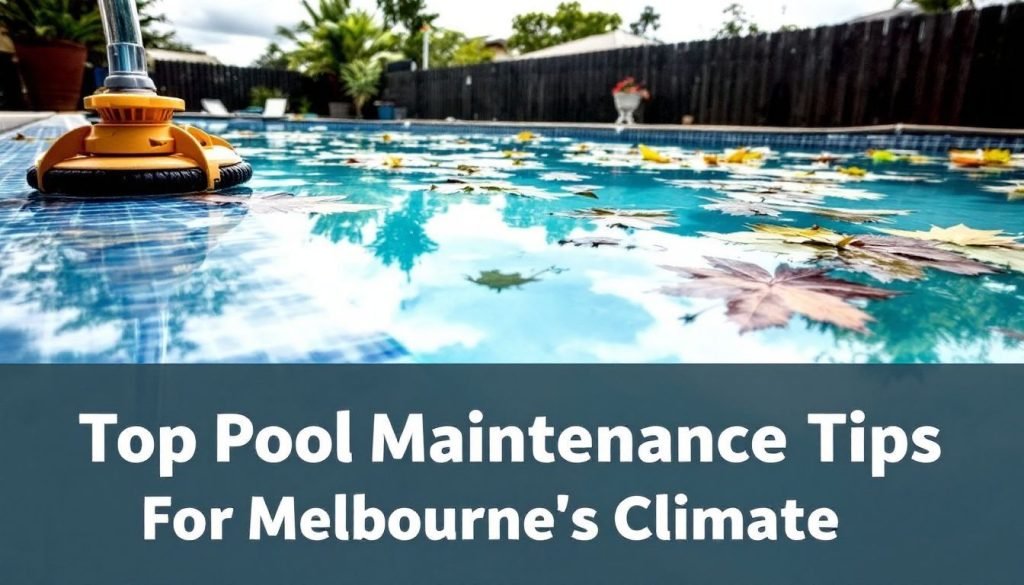
Cleaning frequency may change based on usage and weather conditions. If you have trees nearby, expect more leaves in your pool. Stick to a regular schedule for cleaning and servicing to keep your pool in great shape all year round.
Seasonal changes and adjustments
Melbourne’s weather changes with the seasons. These shifts impact your pool maintenance tasks. During summer, you should clean your pool more often. Scrub the interior walls every other week to remove bacteria and algae.
In peak swimming season, maintain circulation for at least 12 hours each day. This keeps your pool water clear and fresh.
As winter approaches, adjust your routine for colder weather. Reduce cleaning frequency but ensure key checks are done weekly. Keep an eye on chemical levels like pH and free chlorine in winter pools too.
You may need to balance chlorine manually since sunlight is less during this time.
Proper winter maintenance helps prevent costly repairs later on. Close and cover your pool well to protect it from debris and damage over the cold months. These steps make spring reopening much easier while ensuring a safe swimming environment when warmer days return.
Essential Pool Maintenance Tasks for Every Week, Month, and Year
You should check and balance your pool’s water regularly. Make sure to test the chlorine, pH, and alkalinity levels to keep the water safe and clean.
Checking chlorine levelsChecking chlorine levels is key to keeping your pool clean and safe. Free chlorine should be monitored regularly. Aim for a level between 1 and 3 parts per million (ppm). This balance protects against germs, algae, and bacteria.
During winter, you may need to adjust these levels manually. Less sunshine means less natural chlorine is produced. Make sure to test your water often to keep it healthy. Regular testing will help maintain proper sanitation in your pool.
Testing pH levels
Testing pH levels is key for pool care. You must keep the pH between 7.5 and 7.8. This balance helps protect your skin and eyes while swimming.
Use a pH test kit weekly during the swimming season. If levels are off, add chemicals to adjust them quickly. The water needs proper sanitation to stay clean.
During winter, check pH levels less often but do not ignore them. With reduced sunshine, chlorine might need more balancing. Keeping an eye on these numbers will help you maintain good pool water quality control throughout the year.
Monitoring total alkalinity (TA)
Monitoring total alkalinity (TA) is key for pool care and maintenance. TA helps keep your pool water balanced. It should stay between 80 to 120 parts per million (ppm). If the TA level is too low, the pH can swing wildly.
This makes it hard to maintain proper acidity and alkalinity.
You need regular checks on TA levels in your pool water. Check at least once a month or more during heavy use or storms. Adjustments may be needed if you notice changes in chlorine levels or pH readings.
Keeping the right balance will help prevent damage and ensure safe swimming conditions.
During winter maintenance, watch for any drops in TA due to less sunlight and activity. Make sure to act quickly to keep water clean and balanced for spring reopening. Regular monitoring of chemical levels like total alkalinity supports overall sanitation and creates a better swimming experience throughout the year.
Circulating the pool for minimum hours per day
Circulating the pool is key for clear water. You should run your pool circulation system for at least 12 hours each day during swimming season. This helps keep the water clean and free from debris.
During the off-season, aim for a minimum of six hours daily.
Proper pool circulation improves chemical balance too. It helps mix chemicals like chlorine evenly throughout the water. Regular circulation also prevents algae buildup and keeps your pool safe for swimming.
Prioritise this task in your comprehensive pool maintenance schedule for Melbourne weather to ensure great results all year round.
Importance of Monitoring Chemical Levels and Balance
Monitoring chemical levels and balance is vital for a safe and clean pool. It helps keep the water clear and prevents algae growth. Regular checks ensure your pool remains enjoyable all year round.
Stay informed to maintain the best swimming conditions. For more tips on pool care, read on!
Maintaining proper acidity and alkalinity
Maintaining proper acidity and alkalinity is key for a clean pool. The pH level should stay between 7.5 and 7.8. This range keeps the water safe for swimming and helps chlorine work better.
Check your pool’s free chlorine levels often to ensure good sanitation. Low chlorine can lead to bacteria growth, making the water unsafe. Proper chemical testing helps balance your pool’s chemistry.
Adjust the chemicals as needed throughout the year. During winter, you might need to manually balance chlorine because of less sunshine or UV rays. Regular checks will keep your pool clean and ready for spring use.
Keeping tabs on free chlorine levels
Free chlorine levels play a vital role in pool sanitation and balance. Test your pool water regularly to ensure chlorine is at the right level. You want it to be between 1.0 and 3.0 parts per million (PPM).
This will keep your pool clean and safe for swimming.
During winter, you may need to check these levels more often. With less sunlight, maintaining free chlorine can be tricky. Manual adjustments might be needed because UV rays help break down chlorine faster in warmer months.
Proper monitoring of free chlorine helps prevent bacteria and algae growth. It also protects your skin and eyes while swimming. Regularly checking this level is key for effective pool cleaning and upkeep throughout the year, ensuring that you enjoy crystal-clear water when spring arrives.
Tips for Winterising and Preparing for Spring
Adjust your routine during the colder months. Close and cover your pool properly for winter. Get ready to reopen it when spring arrives. For more tips, check out our full guide!
Adjusting maintenance routine for colder weather
During colder weather, your pool maintenance routine needs to change. You should keep an eye on the water’s pH level and free chlorine. Aim for a pH between 7.5 and 7.8. With less sunlight in winter, manually check and balance chlorine levels regularly.
Pool circulation is still important. Run your filtration system for at least six hours each day during this time. This helps keep the pool water clean and clear, preventing algae growth and other problems later on.
Properly closing and covering your pool also protects it from debris while reducing cleaning tasks before you reopen it in spring.
Properly closing and covering pool for winter
Closing your pool for winter is very important. Start by cleaning the pool properly. Remove leaves and debris from the water and walls. This helps to prevent algae growth. Next, check the pH levels of your pool water.
Keep it between 7.5 and 7.8 for best results.
Lowering the water level can also help protect your pool during winter. Aim to drain about one foot of water from above the skimmer line. After that, add a winterising chemical kit to balance everything out in preparation for colder weather.
Finally, cover your pool with a strong, weather-resistant cover. A good cover will keep dirt out and protect against damage from ice or snow. Properly closing and covering your pool reduces maintenance work in spring while ensuring clean and balanced water when you reopen it later on.
Preparing pool for reopening in spring
Properly closing and covering your pool for winter sets you up well for spring. Begin the reopening process by removing any debris from the cover. Clean the cover thoroughly before storing it away.
Next, inspect your pool’s interior walls and floor for any signs of damage or algae growth.
After cleaning, check and balance your pool water. Maintain the pH level between 7.5 and 7.8 to keep it safe for swimming. Test free chlorine levels as well since they are crucial in keeping the water clean during warmer months.
Circulate the water for at least 12 hours each day to ensure proper filtration is taking place.
Finally, fill your pool back to its normal level if needed after winter months. This helps support effective functioning of all equipment when you start using your pool again in springtime.
Staying on top of these essential tasks keeps your pool ready for fun under Melbourne’s sun!
FAQs
1. What does a comprehensive pool maintenance schedule for Melbourne weather involve?
A comprehensive pool maintenance schedule involves regular pool upkeep and checkup, including testing and adjusting the pH levels, chlorine levels, and alkalinity of the water.
2. How often should I service my swimming pool in Melbourne?
The frequency of your pool servicing depends on the weather conditions. During winter months, you may need to carry out more intensive winterising tasks like covering the pool or using special chemicals.
3. Can I handle all aspects of my Melbourne’s swimming pool maintenance myself?
While you can perform some tasks like cleaning with specific equipment and techniques or checking chemical levels yourself, it’s advisable to get professional help for complex tasks such as filtration system checks or adjustments.
4. How important is it to maintain proper pH and chlorine levels in my Melbourne swimming pool?
Maintaining appropriate pH and chlorine levels is crucial for ensuring safe water quality in your swimming pools; these factors directly affect how effectively your sanitiser works.
5. Are there any specific regulations I need to follow when maintaining my swimming pools in Melbourne?
Yes! There are certain local rules regarding safety barriers around pools that you must adhere to while performing routine upkeep or servicing activities.